

Industrial equipment operates under a wide range of temperatures, pressures, vibrations, and environmental conditions. Standard sealing products may work in some situations, but many machines require sealing solutions specifically engineered for their structure and operating environment. This is one reason why custom gasket development has become increasingly important across manufacturing, automation, energy, transportation, and electronic equipment sectors.
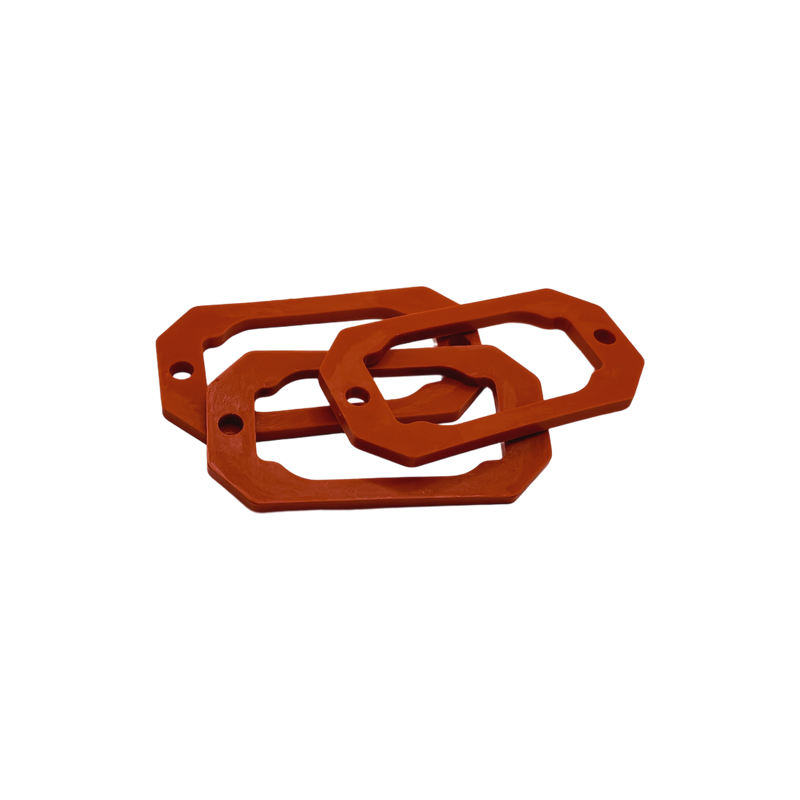
Properly designed rubber gaskets help prevent fluid leakage, block dust intrusion, reduce vibration transmission, and maintain stable equipment performance. When equipment geometry becomes more complex, custom-engineered sealing components often provide greater reliability than standardized alternatives.
Why Are Standard Gaskets Sometimes Not Enough?
Equipment manufacturers frequently face unique installation dimensions, irregular sealing surfaces, and specialized environmental requirements. Standard gasket dimensions may not provide sufficient compression or sealing coverage for these applications.
Custom designs allow engineers to optimize material selection, cross-sectional profiles, hardness levels, and dimensional tolerances according to actual operating conditions. This approach helps improve sealing efficiency while reducing maintenance requirements.
How Do Operating Conditions Affect Gasket Design?
Temperature, chemicals, moisture, UV exposure, and mechanical stress all influence gasket performance. ASTM D2000 is widely referenced within the rubber industry for classifying elastomer materials according to performance requirements and environmental resistance characteristics.
Selecting materials without considering operating conditions can shorten service life and increase maintenance costs. Effective custom industrial rubber gaskets are developed around the application rather than solely around dimensions.
| Operating Condition | Design Consideration |
|---|---|
| High Temperature | Heat-resistant elastomer selection |
| Outdoor Exposure | Weather and UV resistance |
| Chemical Contact | Chemical compatibility testing |
| Continuous Vibration | Compression recovery capability |
What Advantages Do Custom Gaskets Provide?
Customized sealing components can improve assembly consistency and equipment reliability. Manufacturers can incorporate special grooves, mounting features, reinforced structures, or complex profiles that are difficult to achieve with off-the-shelf products.
Applications involving Connector Gaskets, Car Lens Gasket, and Lens Module Gaskets often require precise dimensional control because even minor deviations can affect sealing effectiveness and component performance.
How Does Material Selection Influence Service Life?
Material properties determine resistance to compression set, aging, chemicals, and environmental exposure. ASTM D395 compression set testing is commonly used to evaluate how effectively elastomers recover after prolonged compression.
Long-term sealing performance depends on selecting materials capable of maintaining elasticity throughout the expected service cycle. Material compatibility should therefore be verified through laboratory testing and application validation.
Why Is Manufacturing Precision Important?
Even well-designed sealing products can experience performance issues if manufacturing tolerances are not properly controlled. Precision molding processes help ensure dimensional consistency, stable compression behavior, and predictable sealing performance.
As a manufacturer specializing in precision rubber components, DOIT Rubber develops sealing products for industrial equipment, electronics, medical systems, and fluid control applications. Engineering support, tooling optimization, and process control help ensure reliable product performance across demanding operating environments.
Custom sealing solutions are often required because industrial equipment rarely operates under generic conditions. Matching gasket design, material selection, and manufacturing precision to the application creates stronger sealing reliability, longer service life, and improved equipment performance.