

O-rings are among the most widely used sealing components in modern equipment. Although they appear simple, their performance depends heavily on material selection. Two O-rings with identical dimensions may behave completely differently when exposed to heat, chemicals, pressure, or repeated movement. In many cases, sealing failures are not caused by design defects but by selecting an elastomer that does not match the operating environment.
Industry investigations conducted by sealing associations and equipment manufacturers have repeatedly shown that material incompatibility remains one of the most common causes of premature seal failure. Understanding these risks helps engineers improve reliability before products enter service.
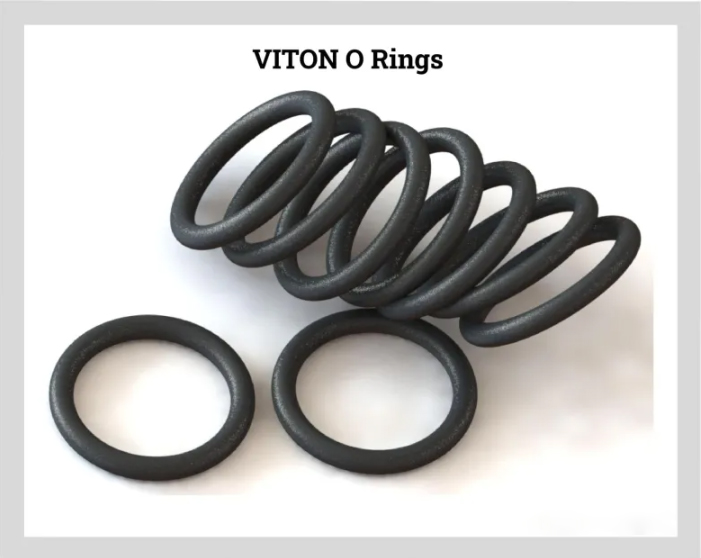
What Happens When An O-Ring Uses The Wrong Material?
Different elastomers respond differently to temperature, fluids, pressure, and environmental exposure. When an unsuitable material is selected, the O-ring may swell, harden, crack, lose elasticity, or experience excessive compression set. Any of these conditions can eventually compromise sealing performance.
Proper O Ring Material Selection requires evaluating the complete operating environment rather than focusing solely on dimensions or hardness.
How Can Chemical Exposure Damage O-Rings?
Chemical compatibility is often overlooked during product development. Some fluids extract plasticizers from elastomers, while others cause excessive swelling or degradation. ASTM D471 is commonly used to evaluate how liquids affect rubber properties after controlled exposure.
A suitable Chemical Resistant O Ring should maintain dimensional stability and mechanical performance throughout its service life. Even minor chemical incompatibility can gradually reduce sealing effectiveness.
| Material Issue | Potential Result |
|---|---|
| Chemical Swelling | Loss of dimensional stability |
| Hardening | Reduced sealing flexibility |
| Cracking | Leakage path formation |
| Compression Set | Permanent sealing force reduction |
Why Does Temperature Matter So Much?
Temperature significantly affects elastomer performance. Materials designed for room-temperature applications may become brittle in cold environments or soften excessively under heat. ASTM D395 compression set testing is frequently used to evaluate how elastomers maintain sealing force after prolonged compression at elevated temperatures.
Applications requiring a High Temperature O Ring Seal should consider both peak temperature exposure and long-term thermal aging behavior.
Can Incorrect Material Selection Affect Medical And Laboratory Equipment?
Medical and laboratory applications often require exceptional material stability. Components such as Freezer Tube O-Ring, Medical Grade Silicone Sheet for Reagents, Reagent-Contact Silicone Pad, and Medical Silicone Reagent Sheet may be exposed to sensitive fluids, cleaning agents, and repeated handling cycles.
Material degradation in these environments can affect sealing performance and overall equipment reliability. Consistency and compatibility therefore become critical evaluation factors.
How Can Manufacturers Reduce Material Selection Risks?
- Evaluate actual fluid compatibility.
- Review operating temperature ranges.
- Verify compression set performance.
- Conduct environmental aging tests.
- Validate performance under application conditions.
DOIT Rubber develops custom sealing solutions for medical, automotive, industrial, and fluid-control applications. Material evaluation, tooling development, and process control are integrated throughout product development to support consistent sealing performance.
Incorrect material selection can create problems that remain hidden until equipment enters service. Evaluating environmental conditions, chemical exposure, and performance requirements together provides a more reliable path toward long-term sealing success and reduced maintenance risks.