

Leakage in a pump rarely comes from one isolated factor. A seal may fail because of incorrect compression, incompatible rubber, surface damage, excessive pressure, installation problems, or gradual material deterioration. Understanding how these factors interact makes leakage investigation more effective and helps manufacturers prevent recurring problems instead of replacing seals without identifying the underlying cause.
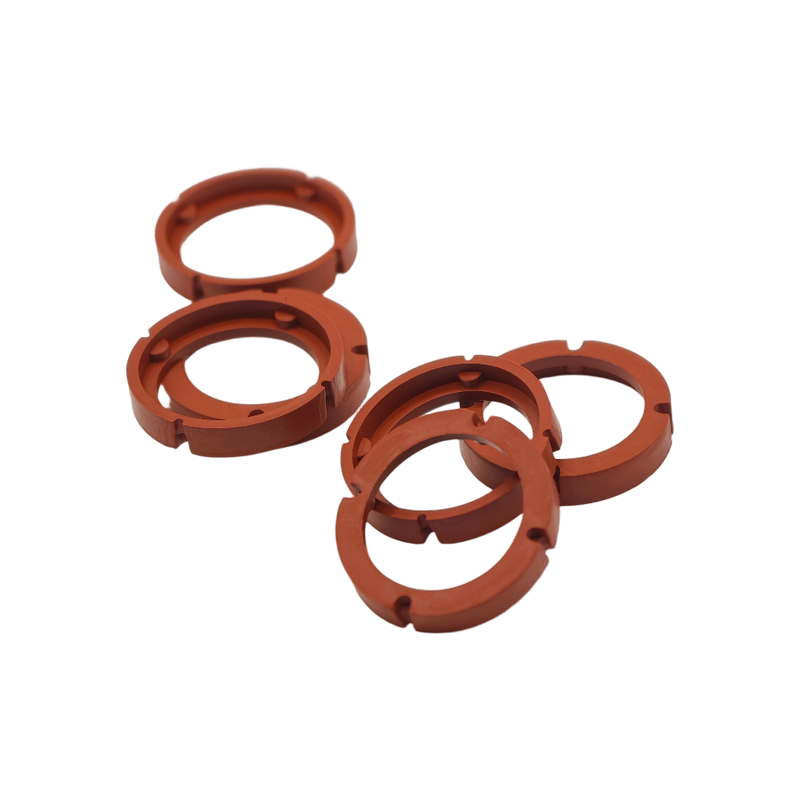
The purpose of pump rubber seals is to maintain a controlled barrier between different media or between the internal pump chamber and the external environment. Once that barrier is disrupted, fluid loss, contamination, pressure instability, or equipment downtime can follow.
What Are the Main Causes of Pump Seal Leakage?
Pump leakage generally develops when the sealing interface can no longer maintain sufficient contact or when the sealing material has been damaged. Installation errors and unsuitable working conditions can accelerate the process.
| Leakage Cause | Typical Effect |
|---|---|
| Insufficient compression | Creates an incomplete sealing interface |
| Excessive compression | May increase stress and accelerate deformation |
| Chemical incompatibility | Can cause swelling, hardening or deterioration |
| Surface damage | Creates leakage paths through cuts or scratches |
| Installation error | Can twist, stretch or damage the seal |
How Does Compression Affect Pump Sealing?
Rubber seals normally rely on controlled deformation to maintain contact with the mating surfaces. Too little deformation may leave a leakage path, while excessive compression can increase mechanical stress and accelerate permanent deformation.
The correct compression depends on seal geometry, material properties, pressure, temperature, and application design. For this reason, sealing performance should be evaluated according to the complete assembly rather than by selecting a seal based only on its nominal dimensions.
This principle is especially important when designing Sealed Fluid Transfer Pump components, where stable sealing must be maintained while fluid moves through the system.
Can Fluid Compatibility Cause Leakage?
Fluid compatibility is often overlooked when a seal appears physically intact. An elastomer can gradually swell, soften, harden, or lose mechanical properties after prolonged exposure to an unsuitable medium.
ASTM D471 provides a standardized method for evaluating the effects of liquids on rubber properties. The method is used to assess changes such as volume, hardness, tensile properties, and other characteristics after liquid exposure.
Testing representative rubber compounds against the actual operating medium provides more useful information than relying only on a general material name. Concentration, temperature, exposure duration, and fluid pressure should also be considered.
Why Can Installation Create Leakage Problems?
Even a correctly designed seal can leak if it is damaged during installation. Sharp edges, contaminated surfaces, excessive stretching, twisting, or incorrect positioning may create defects that are difficult to detect visually.
- Clean mating surfaces before assembly.
- Remove sharp edges that may cut the elastomer.
- Use appropriate assembly methods for the seal geometry.
- Avoid twisting flexible sealing components.
- Confirm that the seal is seated correctly before applying pressure.
Installation controls become particularly important for small components because minor deformation can have a proportionally larger effect on the sealing interface.
How Do Pressure Changes Affect Seal Reliability?
Pump systems may experience pressure fluctuations during startup, shutdown, acceleration, or changes in flow conditions. Repeated pressure changes can increase mechanical stress on sealing components.
Seal geometry should therefore be matched to the expected pressure range. Supporting structures may also be required when pressure could cause excessive deformation or extrusion of the elastomer.
A Micro Sealed Hydraulic Pump, for example, may have limited internal space, making the relationship between seal geometry, pressure, and available installation clearance particularly important.
How Can Manufacturers Improve Pump Seal Leakage Prevention?
Effective pump seal leakage prevention begins during component development. Material selection, seal geometry, groove design, compression, surface finish, and assembly conditions should be reviewed before mass production.
A useful development process can include:
- Define the operating medium and exposure conditions.
- Establish pressure and temperature limits for the sealing system.
- Select an appropriate elastomer according to mechanical and chemical requirements.
- Review the seal geometry and compression conditions.
- Validate the assembly under representative operating conditions.
- Monitor production dimensions to maintain repeatable sealing performance.
Why Is Seal Quality Important for Fluid Control?
Reliable sealing is fundamental to fluid control because leakage can change pressure, flow, contamination levels, and equipment reliability. A seal should therefore be considered part of the fluid-control system rather than an independent rubber accessory.
DOIT Rubber provides customized rubber and silicone components for fluid-control applications and develops sealing products according to application requirements. Its product range also includes Dental Equipment Diaphragm and other specialized diaphragm and sealing components, demonstrating the importance of matching rubber performance with the equipment environment.
Preventing pump leakage requires control at several stages: material selection, component geometry, mold quality, assembly, operating conditions, and inspection. Replacing a leaking seal may solve a short-term problem, but identifying why the sealing interface failed provides a much stronger basis for improving long-term equipment reliability.