

Unlike static sealing components, pump diaphragms continuously flex throughout their service life. Every pumping cycle creates deformation, pressure loading, and material stress. Under demanding operating conditions, even small weaknesses in the elastomer formulation can lead to premature cracking, swelling, hardening, or loss of sealing performance. Material selection therefore becomes one of the most important engineering decisions when developing a rubber diaphragm for fluid handling equipment.
Why Is Material Performance Critical for Diaphragm Applications?
A diaphragm acts as both a moving mechanical element and a sealing component. It must transfer force while simultaneously separating different chambers inside a pump. This dual function requires a balance between flexibility, durability, and chemical resistance.
ASTM D412 testing standards are widely used to evaluate tensile strength and elongation properties of vulcanized rubber. These properties help engineers understand how elastomers respond to repeated stretching and deformation during operation.
How Do Fluids Influence Diaphragm Material Selection?
Fluid compatibility directly impacts service life. Water-based liquids, cleaning agents, medical fluids, oils, and chemical solutions interact differently with elastomer materials. Exposure to incompatible media can cause volume expansion, hardness changes, and deterioration of sealing performance.
For this reason, material selection should always consider actual operating conditions rather than relying solely on general material specifications.
| Operating Factor | Impact on Diaphragm Life |
|---|---|
| Chemical Exposure | Can cause swelling or degradation |
| Pressure Cycling | Creates fatigue stress |
| Temperature Variation | Changes elasticity and durability |
| Continuous Movement | Accelerates material wear |
Why Does Fatigue Resistance Matter More Than Hardness?
Many users focus on hardness values when evaluating elastomers. However, diaphragm applications are often limited by fatigue performance rather than hardness alone. Repeated bending can create microscopic cracks that gradually propagate through the material.
A properly engineered pump diaphragm sealing solution should therefore consider fatigue resistance, tear strength, and recovery characteristics alongside hardness requirements.
How Does Diaphragm Design Affect Material Requirements?
Material and geometry must work together. Sharp corners, uneven thickness transitions, and concentrated stress zones can significantly shorten diaphragm life. Even high-performance compounds may fail prematurely if the diaphragm structure creates excessive localized stress.
Engineering teams often evaluate both material formulation and product geometry during development to achieve better long-term reliability.
Which Applications Demand Higher Material Standards?
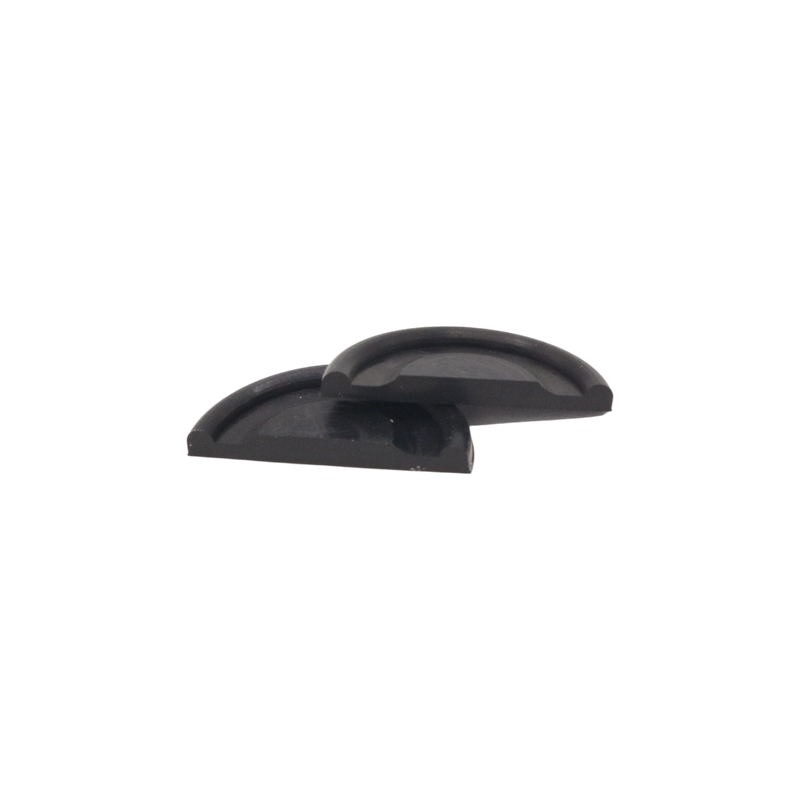
Equipment operating in medical, laboratory, and precision fluid transfer environments often requires particularly stable diaphragm performance. Products such as Dental Unit Rubber Diaphragm, Dental Equipment Diaphragm, and Sealed Diaphragm Pump applications frequently require tight dimensional control and consistent sealing behavior throughout repeated operating cycles.
In these environments, material variation may affect not only service life but also system accuracy and operational stability.
How Can Manufacturers Validate Diaphragm Materials?
- Mechanical testing verifies tensile and elongation properties.
- Chemical resistance testing evaluates fluid compatibility.
- Fatigue testing assesses cyclic durability.
- Dimensional inspection confirms production consistency.
- Functional testing simulates actual operating conditions.
DOIT Rubber develops precision sealing products for pump, medical, automotive, and industrial applications. Material evaluation, mold development, and manufacturing control are integrated into the development process to improve diaphragm reliability and performance consistency.
Long service life is rarely achieved through material selection alone. Successful diaphragm performance comes from matching elastomer properties with operating conditions, geometry design, pressure requirements, and manufacturing quality. When these factors are optimized together, a diaphragm can maintain stable sealing performance through millions of operating cycles.