

Rubber sealing components are widely used in automotive systems, medical equipment, industrial machinery, electronics, and precision devices. Although these components are often small, their performance directly affects equipment safety, operating efficiency, and product durability. For this reason, quality management has become a critical factor when evaluating reliable rubber suppliers.
ISO certification represents a systematic approach to controlling production processes, improving quality consistency, and reducing manufacturing risks. A certified supplier is not only required to meet product specifications but also needs to establish effective procedures covering materials, production, inspection, and continuous improvement.
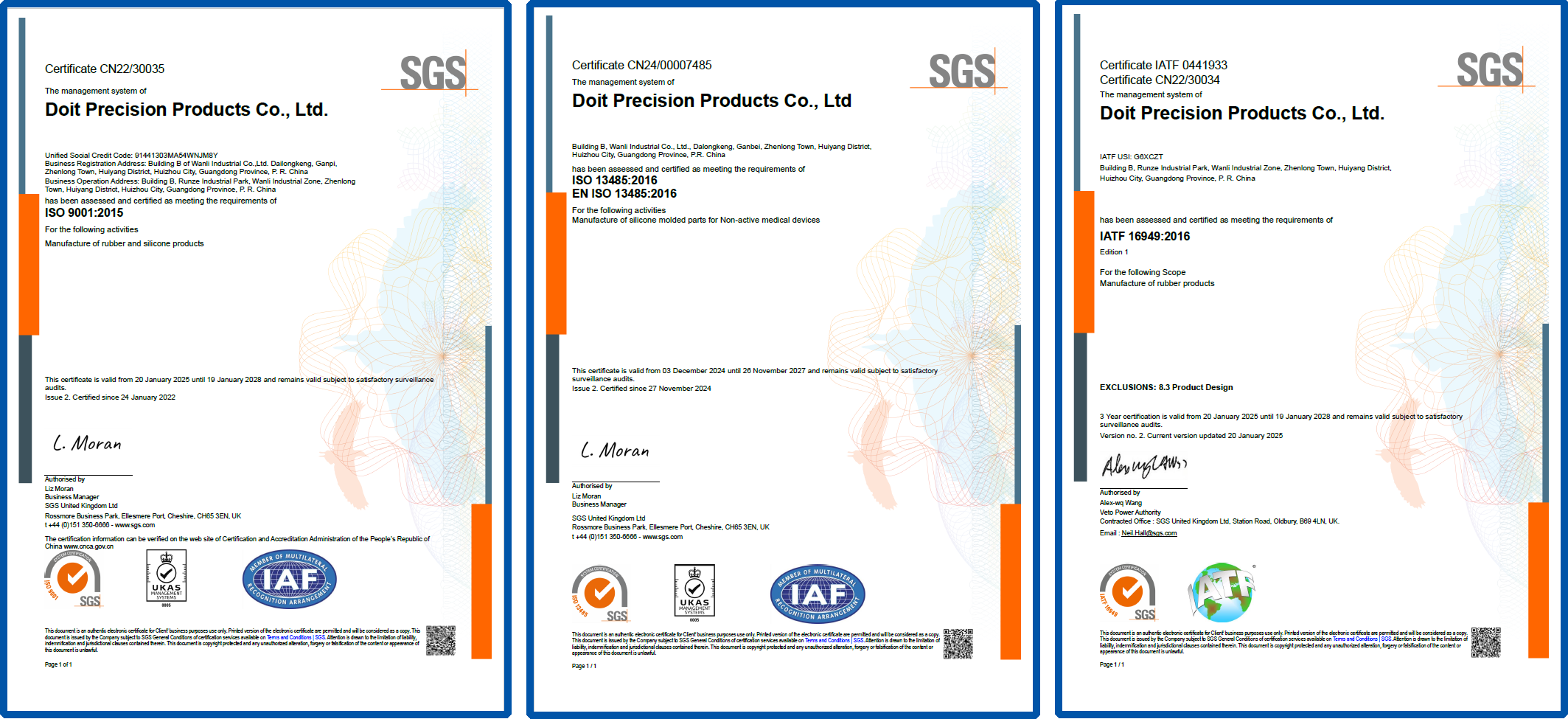
According to the International Organization for Standardization, millions of organizations worldwide adopt ISO management standards to improve operational processes and quality control. For industries that depend on precision sealing components, working with an experienced supplier with a strong quality system can significantly reduce product development risks.
A professional rubber seal manufacturer combines material expertise, manufacturing technology, and quality management to provide stable sealing solutions for different application environments.
Why Does Quality Management Matter in Rubber Seal Production?
Rubber seals must maintain stable performance under various conditions, including pressure changes, temperature fluctuations, chemical exposure, and mechanical movement. Small variations in material properties or product dimensions may affect sealing effectiveness.
Quality management systems help manufacturers control every stage of production, from raw material inspection to final product testing. This systematic approach reduces unexpected variations and improves consistency between different production batches.
| Quality Control Stage | Purpose in Rubber Manufacturing |
|---|---|
| Material inspection | Ensures rubber properties meet application requirements |
| Mold control | Maintains accurate product dimensions |
| Production monitoring | Reduces process variation |
| Final inspection | Confirms product reliability before shipment |
Consistent quality control is especially important for customized sealing components because each application may require different material characteristics, shapes, and performance standards.
What Does ISO Certification Mean for Rubber Suppliers?
ISO certification demonstrates that a supplier follows internationally recognized management principles. It does not simply represent a certificate displayed on a company profile; it reflects a structured system for maintaining production quality.
For rubber component manufacturing, ISO-based management usually covers:
- Process standardization: Defines clear production procedures and responsibilities.
- Risk management: Identifies potential quality issues before they affect customers.
- Document control: Maintains accurate production records and inspection data.
- Continuous improvement: Encourages manufacturers to optimize processes over time.
An ISO certified rubber supplier can provide stronger confidence in production stability because quality control is integrated into daily manufacturing operations.
How Does ISO Certification Improve Rubber Product Reliability?
Rubber sealing performance depends on many factors, including material formulation, molding accuracy, and inspection standards. ISO management systems help connect these factors through controlled processes.
Reliable production requires consistent monitoring of:
| Control Factor | Impact on Product Performance |
|---|---|
| Material consistency | Maintains stable elasticity and durability |
| Production accuracy | Improves assembly compatibility |
| Inspection procedures | Detects potential defects early |
| Process records | Supports quality tracking and improvement |
ASTM International testing methods are commonly used for rubber evaluation, including hardness testing, tensile strength analysis, compression set testing, and aging performance evaluation. Combining standardized testing with ISO-based management helps manufacturers maintain reliable product performance.
Why Should Companies Consider Certified Rubber Suppliers?
Supplier selection affects not only product quality but also production efficiency and long-term cooperation stability. A supplier with established quality systems can better support customized projects and complex manufacturing requirements.
Certified suppliers often provide advantages in several areas:
- More consistent production output
- Better traceability of materials and processes
- Reduced risk of quality fluctuations
- Improved communication during product development
- Stronger support for customized rubber solutions
These advantages are especially valuable for industries requiring strict sealing performance, such as automotive components, medical equipment, and industrial machinery.
How Does ISO Management Support Customized Rubber Components?
Customized rubber products require close cooperation between design, engineering, and manufacturing teams. Without effective process control, customized production may experience issues such as dimensional inconsistency or material variation.
ISO-based management helps manufacturers organize customized production through structured procedures, including:
- Design review: Evaluating product requirements before manufacturing.
- Material verification: Confirming suitable rubber materials for applications.
- Production control: Maintaining stable manufacturing conditions.
- Quality evaluation: Checking performance before delivery.
This approach supports the production of precision components such as Custom Rubber Seals, Industrial Rubber Gaskets, and Silicone Sealing Components, which require high consistency and reliability.
What Should Buyers Check Beyond ISO Certification?
Although ISO certification is an important quality indicator, evaluating a supplier should include additional factors such as technical capability, production experience, and application knowledge.
| Evaluation Area | Key Consideration |
|---|---|
| Engineering capability | Ability to provide suitable sealing recommendations |
| Manufacturing experience | Understanding of different rubber applications |
| Quality system | Stable inspection and production procedures |
| Customization ability | Support for unique product requirements |
A reliable supplier should combine certification, manufacturing expertise, and technical support to deliver consistent sealing solutions.
How Does DOIT Rubber Ensure Reliable Component Quality?
DOIT Rubber focuses on developing customized rubber sealing solutions through controlled manufacturing processes, material expertise, and quality management practices. The company supports different industries with precision rubber components designed for durability, stability, and application-specific requirements.
As a professional Doit Certified Parts Supplier, DOIT Rubber emphasizes process control, product consistency, and continuous improvement to meet the changing needs of global customers.
ISO certification provides an important foundation for reliable rubber manufacturing, but true product quality depends on the combination of advanced production technology, experienced engineering teams, and strict quality control. Through systematic management and continuous optimization, certified suppliers help industrial products achieve safer and more stable performance.